News

COVID-19: Creating a contingency plan

What you need to know about COVID-19 (Coronavirus) as of 12 March 2020

The symptoms for COVID-19 include coughing, shortness of breath, and/or fever, but could also just be tiredness, feeling achy, sore throat. It looks like many people with COVID-19 experience a relatively mild infection, ranging from cold and flu-like symptoms to feeling like the actual flu. Mild to moderate infections are taking about two weeks to recover from. About 20% of people have been experiencing a much more serious infection requiring hospitalisation for several weeks. From the data so far the case fatality rate rises as you get older, and is higher in those with underlying health conditions.

On the 11th of March, COVID-19 was upgraded to a Pandemic by the World Health Organisation. At that time there were over 100,000 cases world-wide and over 4000 deaths.  Schools have closed down in the worst hit countries. New Zealand has five confirmed cases but the worst-case scenario forecast by the ministry of health for NZ is that 40% of the population catch it over an 8 week period. This could mean 30% of staff being unwell and unable to work. It could mean hundreds of elderly at risk with health services unable to meet the demand.

Responsibilities

Workplace risks

Any infectious disease such as COVID-19 is classified as a workplace hazard and the Health and Safety at Work Act 2015 requires that employers take all practicable steps to mitigate risk and protect workers at all times from workplace hazards.

Business risks

A large proportion of workforce could be unwell at the same time which would result in a number of service failures. Your property management company may not have the personnel to provide all of your services. Suppliers and contractors may not be able to deliver their normal products and services.

What actions can you take to mitigate the risks?

  • Download our Contingency Plan template and use it.
  • Communicate the potential risk to your team
  • Allow staff to work from home where possible
  • Organise times for staff to get immunised
  • Establish your minimum essential services and devise a list of what and how staff redirect their time if required
  • Inform owners & tenants of a potentially longer than normal wait for addressing issues such as maintenance and repairs.
  • Adjust BDM strategy to be more digitally or telesales focused instead of networking or meetings.
  • Increase space between workstations
  • Implement alternative social practices e.g. no shaking hands or kissing
  • Avoid attending international conferences and unnecessary international travel at this time.
  • Where possible, buy increased levels of workplace supplies e.g. paper, toilet paper, hand cleaner


Final words

Kia tūpato! Be careful about how you talk about COVID-19. Please read this very important resource on how to avoid stigmatising people with the disease. Get your news from a trustworthy source. The Ministry of Health’s website has a lot of good information.

Credit must go to Dr Siouxsie Wiles (@SiouxsieW) and Dr Reremoana Theodore (@MoanaTheodore) for pointing me in the right direction and providing valuable information.


 

Creating a COVID-19 Safe Property Inspection Process

Why shouldn’t we just stop doing inspections?

It has been suggested by some other commentators in the sector that rental property inspections should be suspected for 90 days. Although we applaud the efforts to keep staff safe, the question we ask is, what happens after 90 days is up?

Nowhere has the Ministry of Health ever set a time frame of 90 days. The only timeframe we can be certain about is that nothing can go back to how it was until we have a vaccine for Coronavirus. Best estimates are saying this will be 18-24 months away.

Currently in New Zealand, in order for certain insurance claims to be eligible, we must inspect the rental property every three months. The current inspections process, however, may not be safe for property managers.

Creating a COVID-19 safe inspection process

There are possibly many solutions to this challenge including technology for inspecting the home or tenant self-inspection systems. The most practical approach, that would be easy to implement, would be adding a pre-inspection risk analysis to every inspection and then improving the safety of the inspection itself.

For example, this might mean conducting a pre-inspection phone survey with the tenant to assess the current risk within the rental property. If the risk is low then the inspection will go ahead as scheduled. If not, then it will be rescheduled for 14 days from now.

For the inspection itself, the tenants would be required to be out of the house at the time of inspection, the property manager would wear appropriate protective clothing (e.g. gloves & mask), and would take extra precautions such as avoiding touching surfaces. Upon completing the inspection the property manager would discard their protective clothing and clean their hands with hand sanitiser.

Why start a property management company

Why start a property management company?

Why does anyone do it? That's a good question

Firstly, welcome! Kia ora! This is the first blog of a new series about what it takes to start a property management company. We hope that it’s educational and entertaining for anyone working in the sector.

Secondly, this is based on my real life story. In December, I began thinking seriously about starting a company. After some consultation and advice I started: Dunedin Property Management. In this blog, I aim to be open and honest provide a real depiction of what it takes to start a property management company. 

So back to the original question, why?

 
The overall reason is that I think there is a big opportunity right now to build a valuable company. To be more concise, however, I have broken it down to the six reasons why I think it is a good time to build a property management company.
 

Reason #1: Rent Rolls are worth a lot

I’m the past 6 months working with Hamish Turner & Associates I have observed between 10 and 15 rent rolls being sold. The average sale price that Hamish Turner has achieved for these business owners has consistently grown. This fact alone makes building a property management company a very attractive and valuable proposition.

Reason #2: More people are renting

The lack of affordability of homes in New Zealand over the past decade has slowly increased. This has resulted in a steady increase in the number of people renting versus buying. This increased demand for rentals has pushed the price of rent up and made being a landlord more profitable. This trend is forecast to continue for the foreseeable future.

Reason #3: More rentals are being professionally managed

It’s getting harder and more riskier for landlords. In response to the growing renting population, the government has increased regulation to make renting safer and more equitable for tenants. This increased regulation is making it more difficult for owners to self manage. What we are seeing is that owners are either; a) selling their rental property, or b) getting the property managed by a professional property manager. This pressure on owners grows the number of rentals being professionally managed. This is good for all property management companies. 

Reason #4: The upside is huge

Historically and comparatively (to Australia) the number of rentals that are professionally managed is low. At present, the best estimate is that about 40% of New Zealand’s rentals are professional managed. In the more highly regulated market of Australia this is over 80%. What that suggests is that New Zealand still has a long way to go. Even if the market only grows a conservative 10% in the next 10 years it equates to more than 3000 additional rentals entering the property management sector every year. This would add more than $15,000,000 in market capitalisation to existing company values each year. That’s huge annual capital gains for property management companies.

Reason #5: Industry expertise
Hamish Turner is a recognised expert in property management with over 20 years experience here and in Australia. In the past 5 years, I have worked with the majority of real estate brands in New Zealand either at the agency level or with individual agents. As part of Hamish Turner & Associates I have engaged with hundreds of property management companies in New Zealand. This knowledge and my access to world leading mentors puts me in a unique position to build a successful business.

Reason #6: My networks in the Dunedin market

I am fortunate to have strong personal and collegial networks in Dunedin. Many of these people own investment properties, are property developers, or real estate agents. A number have committed to supporting me in this venture and that allows me to get Dunedin Property Management off the ground and moving quickly.

So those are the 6 main reasons. As such, the opportunity was too great to ignore.

Follow the journey of building Dunedin Property Management

In this blog series, we document and record the journey of building a property management company in New Zealand. We see the ups and downs our Associate takes on the challenge.

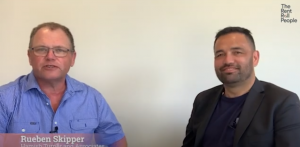
rueben skipper

About the author

Rueben is a consultant at Hamish Turner & Associates. He is an entrepreneur with 20 years of business experience in a number of sectors. In the past decade, Rueben has worked in a handful of technology startups (e.g. Timely) in the area of digital sales and marketing. In addition, he has run a social media marketing agency since 2013 specialising in social media services and digital marketing services in the real estate sector in NZ and the founder of Dunedin Property Management

You can check out more about his background and follow his VLOG on his Linkedin profile.

Subscribe to our monthly newsletter Be the first to receive the latest news on property management and rent roll listings


property management business audit

REAA Licence 10002029, Excalibre Real Estate Richmond Limited
Excalibre Real Estate Richmond Limited - Licensed Agent (REAA 2008)
257 Queen Street, Richmond, 7020

Top 10 Questions To Ask Prospective Tenants

1. When and why are you moving?

Unless they provide a good reason, you should be wary of prospective tenants who are hoping to move in straight away. Most rental properties require a month’s notice from the tenant if they want to leave, so a candidate who is looking to move in immediately may have left things too late – a sign that they may be unreliable. And why are they moving? While the reasons will usually be fair and genuine, you should be looking for red flags such as evictions and disagreements with neighbours.


2. How long have you lived in your current residence?

There’s no better quality in a prospective tenants than reliability, and none worse than flakiness. Whether the potential tenant spent 10 problem-free years in their last rental, or has lived in six apartments in the last 12 months, you can expect their past performance to be a reliable predictor of the future.


3. In what capacity are you employed, and what do you earn?

If the prospective tenants enjoy stable employment in a well-paid position, you can be confident in their ability to pay rent in the long term. A good rule of thumb is if the tenant earns 2.5x the monthly rent, they should be able to afford it. Remember to combine the earnings if the application includes multiple tenants who work.


4. Do you agree to a credit or background check?

If they agree, you can get a good idea of the prospective tenants’ level of responsibility, both socially and financially. If they don’t, that’s as good a sign as any that they’ve got something to hide. Remember that you’ll need written consent to run these checks – a verbal agreement is not legally binding.


5. Do you have references?

Lying is easy, particularly for those who have a lot of practice. The best way to check the quality of a potential tenant, therefore, is not to get the information straight from the horse’s mouth, but rather to ask an (ideally independent) third party.

Ask for references from former landlords and employers. If the candidate is hesitant to hand them over, it should be a large and loudly flapping red flag. If they do offer some up, take the time to speak to the references directly, and ask probing questions regarding the tenant’s character and reliability.


6. Have you ever been evicted from a property?

An answer of yes shouldn’t automatically annul an application – if nothing else you can be confident that the candidate is honest! There may be extenuating circumstances that are worth listening to. It may have been through no fault of the tenant’s, or a long time ago and with no issues since. If the answer is yes, it’s not a great sign, but be sure to explore the answer further.


7. Will you have the bond and first month’s rent ready before you move in?

Always take receipt of the security deposit and first month’s rent before the tenant moves in – no ifs, no buts, no asterisks, no exceptions. If they can’t get the funds together in time, they’re not the tenant for you.


8. Who will be living in the property?

A single tenant, a couple, a family, a group of friends? As the manager of the property, you have every right to know who will be inside it. Each type of tenant will bring their own set of pros and cons – young families are stable, but toddlers see every surface as a potential canvas. Sharehouse arrangements can be profitable, but individual tenants will constantly come and go.


9. Are you a pet owner?

Decide from the outset whether your property is pet-friendly or not. If you institute a ‘no pets’ policy, you can happily strike any potential tenant with a pet off your list. If you choose to accept applicants with pets you’ll have access to a greater pool of candidates, but also expose yourself to greater risk – claws, teeth and bodily functions (of pets and tenants alike) can cause real and lasting damage to both the building and its furnishings.


10. Do you have any questions for us?

It’s important to understand that just as you’re trying to find the right tenant for your property, potential tenants are trying to find the right property for themselves. It’s important then to give them the opportunity to ask you questions so that they can identify whether or not the rental is right for them.

22 Strategies For Growing Your Rent Roll

1. Provide incredible service to your existing customers.

Growth all starts with retention and retention starts with looking after your customers. Check out our Top 10 retention Tips.

2. Be an expert. 

Owners of investment properties will only trust you if they believe you know their situation. If your owner is a property investor then understand what numbers motivate him. Is it yield or capital gain? How leveraged is the owner?


3. Network with real estate agents.

Sales agents are a large source of new leads. Meeting regularly with successful agents is important.


4. Use Linkedin.

An online social media tool for networking with professionals and in particular real estate agents.


5. Ask for referrals.

Happy owners will have friends who are owners.


6. Ask friends and family.

Ask them to refer potential customers.


7. Offer prospects a deal they cannot refuse.

It’s never advisable but reducing your management fee, or other fees can secure you a deal.


8. Adwords.

Google search is a place that a number of owners will look when seeking a property manager.


9. Be the first to respond.

Owners will often be comparing companies. Be the first to respond and you will have more chance of winning.


10. Partner with local businesses

Running a shared promotion e.g. an Investor evening with a property developer or a coffee group with at a cafe can be beneficial to all involved.


11. Join BNI

A proven effective strategy for growing your rent roll (but do have to get up early)


12. Promote your listings exceptionally.

Owners will be looking to see what properties are renting for in their neighbourhood. If your listing (online or in-store) stand out and look professional then that will attract new owners to you.


13. Email marketing.

Buy a list of owners in your region and send them emails promoting your service.


14. Facebook ads

No better way to target your specific audience.


15. Hunt competitor clients.

Find out who they are and find out what would get them to change to you.


16. Join the school PTA.

Schools are a fantastic source of leads and networking opportunities.


17. Stage your properties for inspections.

Beautiful inspection pics show your owner that they care and attracts good tenants.


18. Partner with tax agents and accountants.

Become their preferred provider of property management services.

19. Attend industry events.

Be a guest speaker at a property investor event.


20. Try bricks and mortar advertising tactics.

You can run an ad in the local newspaper, send out flyers, billboards etc


21. Have a beautiful office.

A retail office space with frontage or space for signage will attract customers.


22. Sign a written vehicle.

One of the best value for money things you can do is sign write your car. Everywhere you go on an average day you will be promoting your business.